
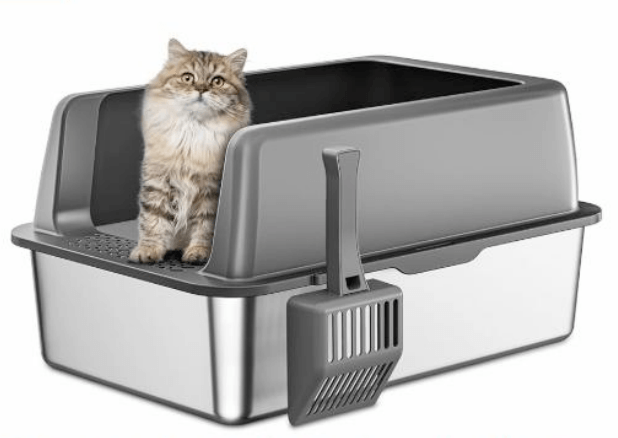
TL;DR: Most cats show no strong preference between covered and open litter boxes when both are properly sized and cleaned. Research suggests box size, cleanliness, and location influence use far more than lid presence. The best approach: offer both styles for two weeks and track which one your cat uses more.
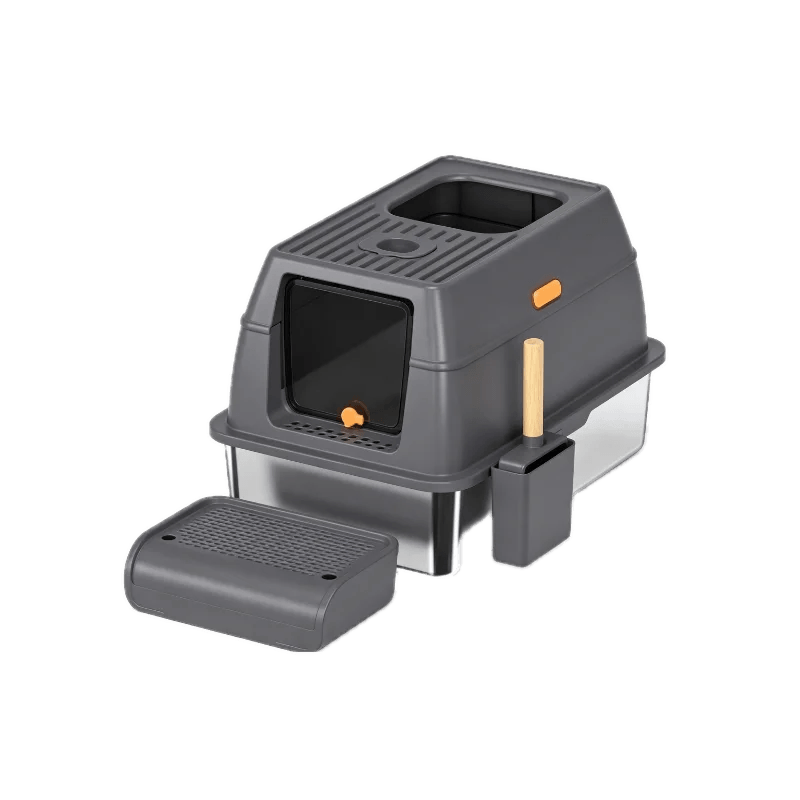
What the Research Actually Says About Cat Preference
Very few peer-reviewed studies have tested feline litter box preference head-to-head. The pet industry likes to claim cats prefer open boxes because it mimics the wild, but the empirical data tells a less dramatic story.
The most-cited work here is Ross et al., published in the Journal of Feline Medicine and Surgery. The researchers tested 28 cats with no history of inappropriate elimination, giving each one a covered and an open box, both cleaned daily.
70% of the cats showed no preference at all. 15% strictly used the covered box, 15% strictly used the open one. The researchers’ takeaway: as long as boxes are kept meticulously clean, a hood does not cause litter box aversion in the average healthy cat.
28 cats is a small sample. Nobody has replicated it at scale that I’m aware of, which is itself worth noting.
Why Lid Presence Isn’t the Variable That Matters Most
Lid presence sits below three other variables when it comes to predicting whether a cat will actually use a box: size, cleanliness, and location.
The American Association of Feline Practitioners (AAFP) Feline Environmental Needs Guidelines say a litter box should be 1.5 times the length of the cat, measured from nose to the base of the tail. The average domestic cat runs about 18 inches long, which puts the ideal box at 27 inches minimum.
This is where I get on my soapbox, because almost nothing on the pet store shelf meets that number. The Catit Jumbo Hooded Pan measures 22.4 inches. The Nature’s Miracle Advanced Hooded Box measures 25.25 inches. Both of those are marketed as “jumbo” or “large” and both are undersized for an average cat, let alone a Maine Coon or a chunky domestic shorthair. When a cat rejects a covered box, there’s a very good chance they’re rejecting the cramped footprint, not the lid. The lid gets blamed because the lid is visually distinctive and the dimensions are not. You can watch a cat try to turn around in one of these things and see them bump the walls on every rotation. That’s substrate aversion in slow motion.
Factors ranked by behavioral impact:
- Cleanliness — boxes scooped less than once a day get rejected a lot.
- Size. Not being able to turn around without touching the sides is a major issue.
- Location: boxes next to washers, dryers, or furnaces deter use because of noise and vibration.
- Lid presence is a secondary factor for most healthy cats.
The Case for Covered Boxes (And Who They Actually Suit)
Covered boxes do serve specific behavioral and mechanical functions. Shy or low-confidence cats sometimes prefer the physical barrier of a hood, especially in a chaotic household.
They also solve real problems for owners. Cats that stand to urinate (high-sprayers) or dig like they’re excavating a foundation will fling waste outside an open pan. High-sided open boxes exist, but a fully covered box or a top-entry model like the Modkat will contain the spray entirely.
Choose a covered box if:
- Your cat sprays urine horizontally against the box walls.
- Your cat aggressively kicks litter over the sides of a standard pan.
- The box has to live in a primary living space (studio apartment, open-plan kitchen).
- You have dogs that treat the litter box as a snack bar.
The Case for Open Boxes (And Why Most Vets Lean This Way)
Vets generally recommend open boxes because they match feline survival instincts and make health monitoring easier. Cats are predator and prey at once, and elimination is a vulnerable moment. An open box gives 360-degree sightlines and multiple escape routes.
Open boxes also don’t concentrate odor. Peer-reviewed ppm measurements inside commercial covered boxes are, as far as I can find, basically nonexistent, but the veterinary consensus is that trapped ammonia irritates feline airways. A box that smells fine to you standing over it may be a different environment entirely inside the dome.
Open boxes also force the owner to see the waste, which leads to more frequent scooping and faster catches on medical issues (blood, mucus, unusual volume, straining).
Choose an open box if:
- You know yourself and you know you’ll forget to scoop a box you can’t see into.
- Your cat has a history of urinary tract problems.
- You’re using something large and non-traditional (a 20-gallon storage tote, a stainless steel hotel pan) to actually hit the 27-inch length requirement. The hotel pan crowd on r/CatAdvice is loud for a reason — people often report fixing chronic elimination problems just by switching to a big open metal pan.
Multi-Cat Households Change the Math
In multi-cat homes, covered boxes can quietly escalate territorial conflict because they create single-entry chokepoints.
The AAFP’s n+1 rule is standard: one box per cat, plus one extra, distributed across different locations. But box count alone doesn’t solve geometry. A covered box has one exit. If the dominant cat parks outside that exit, the cat inside is trapped. Takes maybe one or two ambushes before the subordinate cat decides the covered box is a bad idea and starts eliminating somewhere “safer” — a bath mat, a pile of laundry, the guest bed. Open boxes defuse the ambush geometry because a cat can bail out in any direction.
Life Stage and Health Factors That Override Preference
Physical limitations outweigh preference. As cats age or develop conditions, their ability to navigate certain box types drops off, often faster than owners notice.
According to the Cornell Feline Health Center, up to 90% of cats over the age of 12 show radiographic evidence of osteoarthritis. A senior cat with sore joints is not going to compress their spine to duck under a hood, and they’ll avoid any box with a high entry lip. I’ve seen cats start eliminating next to their box and get blamed for “being spiteful” when the real problem was a two-inch step they couldn’t make anymore.
Decision table by life stage and condition:
| Cat Profile | Recommended Box Type | Primary Reason |
|---|---|---|
| Kittens (under 4 months) | Open, low-sided | Easy access while learning |
| Senior Cats (12+ years) | Open, low-entry (under 3 inches) | Mobility, osteoarthritis |
| Overweight Cats | Open, extra-large | Covered boxes restrict turning |
| Cats with FLUTD | Open | Lets you monitor urine for blood or straining |
| Post-Surgical Cats | Open, low-sided | Prevents stretching sutures on entry |
How to Run a 2-Week Preference Test at Home
Rather than guessing, run a standard preference test. The protocol isolates box type as the only variable.
- Buy two new boxes. One covered, one open. Both have to meet the 1.5x body length rule (27 inches for an average cat).
- Place them side-by-side, same room, about a foot apart.
- Use identical substrate — two to three inches of the same unscented clumping litter in both.
- Scoop both boxes at the same time, every day.
- Track usage for 14 days. Keep a notepad next to the boxes and tally urine clumps and stool deposits in each.
If one box gets 70% or more of the action, that’s a clear signal. If it’s roughly 50/50, your cat genuinely doesn’t care and you can pick the style that fits your home.
One note: don’t swap the boxes’ positions halfway through. People do this trying to “control for location” and it just confuses the data. Pick spots, leave them.
FAQ
Do cats actually prefer covered or open litter boxes?
Most healthy cats don’t have a strong preference, as long as both options are large enough and scooped daily. Size and cleanliness matter more than the lid.
Are covered litter boxes bad for cats?
Not inherently. They become a problem when they’re too small (and most commercial covered boxes are), when they aren’t cleaned daily (ammonia builds up inside the dome and the cat is the one breathing it), or when they’re used in a multi-cat household where the single exit turns into an ambush point. A covered box in a one-cat home with a diligent scooper is fine. A covered box in a four-cat home where someone scoops twice a week is a behavior problem waiting to happen. The box itself is neutral; the context around it is what makes it work or fail.
How can I tell if my cat hates their current litter box?
Balancing on the rim to avoid touching the litter, not burying waste, sprinting out immediately after use, or eliminating right next to the box on the floor.
Should I switch my senior cat from a covered to an open box?
Yes. Up to 90% of cats over 12 develop arthritis, and covered boxes force a crouch that hurts. An open box with an entry lip under three inches is the move.