
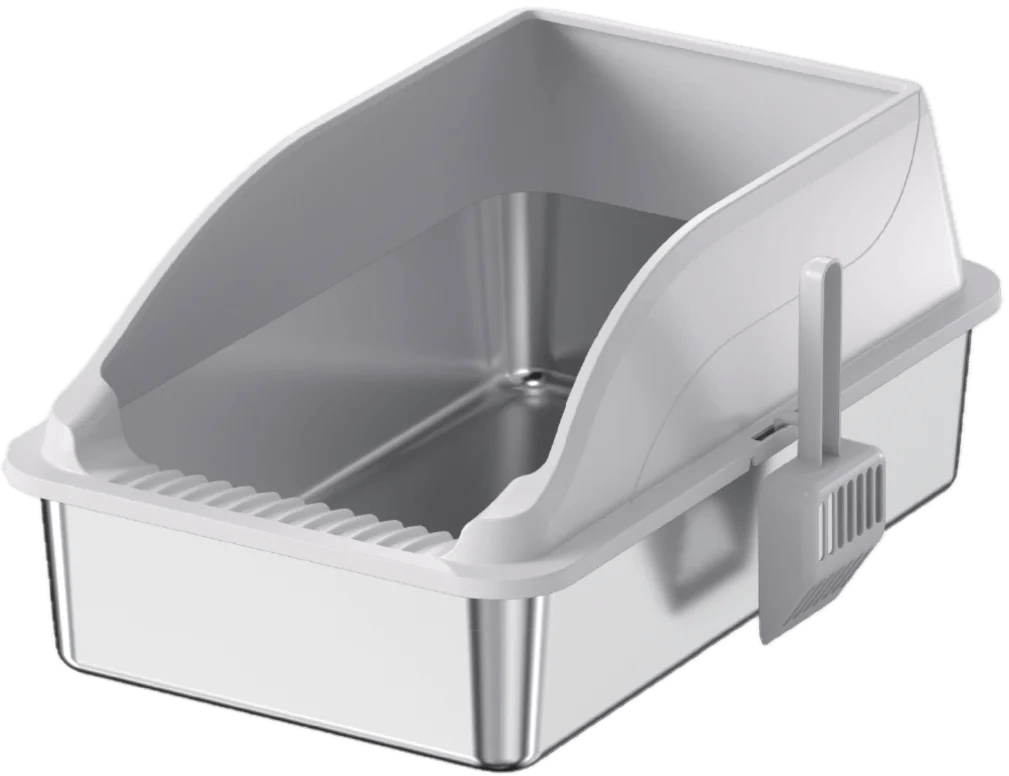
TL;DR: Your cat’s litter box should be at least 1.5 times your cat’s length from nose to the base of the tail. For most adult cats, that means a box 22 to 26 inches long. Large breeds need 30+ inches, which usually means buying a storage tote instead of a standard pet-store box.
The 1.5× Rule: The Only Sizing Formula That Matters
Veterinary behaviorists use a specific formula for litter box sizing: the box should be at least 1.5 times your cat’s length from the nose to the base of the tail. Width should be at least equal to the cat’s length (1×).
The American Association of Feline Practitioners established this to make sure cats have room to enter, turn around, dig, and cover without touching the sides. A box that hits the 1.5× threshold keeps the cat from feeling trapped, and it cuts down on the cat stepping in its own soiled litter while trying to pivot.
How to Measure Your Cat Correctly (Most Owners Mess This Up)
To apply the 1.5× rule, you need an accurate measurement of your cat. Most owners eyeball it based on weight, which doesn’t work. A 12-pound compact British Shorthair has a very different body length than a 12-pound lanky Savannah.
Wait until your cat is actually standing on all four legs. A sleeping or curled cat will give you a number that’s several inches short. Put a soft measuring tape at the tip of the nose, run it along the spine, and stop at the base of the tail where it joins the body. Don’t include the tail itself. If your cat measures 14 inches nose-to-base, multiply by 1.5. Your minimum box length is 21 inches.
That’s it. That’s the whole measurement.
Litter Box Size Chart by Cat Weight and Breed
The table below gives minimum recommended dimensions based on average nose-to-tail-base measurements across common sizes and breeds.
| Cat Profile / Breed | Avg. Weight | Est. Length (Nose to Tail Base) | Minimum Box Length (1.5×) | Minimum Box Width (1×) |
|---|---|---|---|---|
| Small Adult (e.g., Siamese) | 6–8 lb | 12–13 inches | 18–19.5 inches | 12–13 inches |
| Average Adult (DSH) | 9–11 lb | 14–15 inches | 21–22.5 inches | 14–15 inches |
| Large Adult (e.g., Bengal) | 12–15 lb | 16–17 inches | 24–25.5 inches | 16–17 inches |
| Extra Large (Maine Coon) | 16–20+ lb | 18–22 inches | 27–33 inches | 18–22 inches |
For most average adult cats in the 9–11 lb range, you’re looking at roughly 22 inches long by 15 inches wide. If you own a Maine Coon or a Ragdoll, you’re going to need something over 30 inches. There is no commercial “cat box” at that length. You will be shopping in the storage aisle.
Why Most Pet-Store Litter Boxes Are Too Small
Manufacturers design litter boxes to fit retail shelves and shipping pallets, not cats. The gap between what pet stores label “Large” and what a cat actually needs is embarrassing.
Look at two of the top sellers:
- Van Ness Large Litter Pan: 19″ L x 15.13″ W x 6.5″ H
- Petmate Jumbo Litter Pan: 22″ L x 16.5″ W x 6.5″ H
An average 10-pound cat needs a 22.5-inch box. The Van Ness “Large” is 3.5 inches short. The Petmate “Jumbo” barely clears the minimum for a standard domestic shorthair and fails outright for anything bigger. If you’ve been buying these for a 13-pound cat and wondering why there’s pee on the mat every morning, that’s your answer.
The Storage Tote Hack (And When It Beats a “Real” Litter Box)
This is the section I actually care about, so bear with me.
Cat behaviorists, Jackson Galaxy among them, routinely tell people to ditch commercial litter boxes and buy a plastic storage tote instead. Under-bed bins give you the dimensions large cats need for a fraction of the price of anything marketed to cat owners. The markup on a “giant” cat box with a hood and a stupid little door is one of the quieter scams in the pet industry, and I will die on that hill.
The Sterilite 60 Quart Underbed Box is the usual pick. Dimensions are 34″ L x 18″ W x 6.13″ H. At 34 inches, it fits a 20-pound Maine Coon with room left over. It costs about what a sandwich costs. You can buy three of them for the price of one hooded box that your cat hates anyway.
Pick clear or semi-transparent plastic. Cats like to see what’s around them while they’re eliminating (this is a vulnerable moment for a small predator, and they know it). Skip the lid. Covered boxes trap ammonia and restrict the vertical space cats use when they stand to dig or cover. If you’re going taller — a 30-gallon bin for a sprayer, say — grab a utility knife and cut a U-shaped entry about 6 inches wide into one of the short ends, then sand the cut edges so they don’t catch fur or paws. Takes five minutes.
One caveat I’ll admit to: I still occasionally recommend a commercial box for people with very small apartments where the tote footprint just doesn’t fit anywhere sensible. The textbook answer is “make it fit.” I don’t always enforce that.
Sizing for Kittens, Seniors, and Special Cases
Length and width aren’t the whole story. Wall height decides whether a cat can actually get in.
Kittens. Under 4 months, keep the entry wall at 2 to 3 inches. A standard 6-inch wall means jumping, and some kittens will just avoid it. Plan on replacing the starter box around the 5-month mark.
Senior cats. Up to 90% of cats over 12 have osteoarthritis. Stepping over a 6-inch wall hurts. Seniors need a big floor (so they aren’t making tight turns on sore joints) with an entry no higher than 2.5 to 3 inches. This is the single most under-addressed issue I see in homes with older cats, and half the “my 14-year-old suddenly stopped using the box” calls I take are solved by cutting a lower entry into whatever they already own.
High-pee-ers. Cats that stand to urinate, or spray against a wall, need high sides. Use a tall tote (15 to 18 inches) and cut a low entry door. Contains the mess, keeps the floor space.
Is Your Current Box Too Small? 6 Behavioral Red Flags
Cats don’t eliminate outside the box out of spite. If the box is too small, they’ll show you with specific physical workarounds, usually for weeks before they give up on it entirely.
- Perching. All four paws on the rim, avoiding the litter.
- Overhang. Front paws in, rear end hanging over the edge. Pee or poop lands on the floor.
- Wall scratching. The cat scratches the plastic walls or the surrounding floor instead of burying.
- Hesitation — approaching the box, sniffing, walking away, coming back, repeating.
- Cramped posture. Head pressed against one wall, tail against the other, while squatting.
- Near misses. Elimination directly next to the box, not in it.
If you’re seeing these in a clean box with a healthy cat, size is the first thing to rule out.
Multi-Cat Households: Size Plus Quantity
A huge litter box does not substitute for multiple boxes. The n+1 rule still applies: one box per cat, plus one extra. Two cats, three boxes.
And every one of those boxes has to meet the 1.5× rule for the biggest cat in the house, not the average. A 22-inch box that works for your DSH is not acceptable if her housemate is a Maine Coon.
Lining three boxes up along the laundry room wall counts as one elimination zone to your cats, not three. Cats are territorial, and a dominant cat can block a single room without even trying hard. Spread the boxes across different rooms, ideally different floors. Resource guarding around the box is one of those things that owners don’t notice until they do, and then they can’t unsee it.
FAQ
Can a litter box be too big for a cat?
No. Outdoor cats have the whole yard. As long as the entry height works for the cat, floor space can’t really be excessive.
What size litter box for a Maine Coon or other large breed?
30 to 34 inches long. Standard commercial boxes don’t go there. You’re buying an under-bed tote or building something.
How tall should the sides of a litter box be?
For healthy adults, 5 to 7 inches is standard. Seniors and kittens need an entry of 2.5 to 3 inches, which usually means cutting down one wall of a taller box rather than buying a shallow one (shallow boxes are also narrow, so you lose floor space you need). For sprayers, back and side walls should be 12 to 15 inches, with a low cut-out for entry. Mix and match depending on which problem you’re actually solving — most households with more than one cat end up with at least two different box configurations, which is fine and normal, not a sign that you’re doing it wrong.
Do I need a bigger box for a long-haired cat?
Yes. Long-haired cats need a bit more room to squat without fur dragging through soiled litter. A 1.75× length ratio works better than 1.5× for them.
At what age should I switch my kitten to a full-size litter box?
Most kittens outgrow a starter box by 4 to 5 months. Once the body length hits around 10 inches, move them to an adult-sized box.
Dana Pruitt is a feline behavior consultant who spent too many years cleaning up overhang accidents before she took her own advice. Current setup: two 34-inch Sterilite totes for one 14-pound rescue who refuses to acknowledge that the second box exists.